

Football has always been more than a game in Africa; it is culture, identity, and shared passion. In recent years, Morocco has taken that passion beyond the physical pitch and onto the virtual stage, positioning itself as one of Africa’s leading forces in football esports and a benchmark for the continent.
Since formally embracing football esports in 2021, Morocco has demonstrated how a clear vision, strong institutions, and national pride can translate traditional football dominance into sustained success in competitive gaming. Backed by the Fédération Royale Marocaine des Jeux Électroniques (FRMJE), the Royal Moroccan Football Federation (FRMF), and key government ministries, the country has built a structured bridge between its football heritage and the digital game.
Building Africa’s Most Structured Football Esports Ecosystem
Morocco’s rise did not happen by chance. According to Abdelkader Elkalidi of the FRMJE, the country’s success is rooted in structure, transparency, and collaboration. Local competitions such as eBotola and eDawry have created clear pathways for talent discovery and development, allowing players to compete consistently while gaining visibility and professional experience.
These leagues are open to clubs and associations, ensuring that esports growth is not limited to an elite few but remains accessible to communities across the country. Selection for international representation is merit-based, reinforcing trust, credibility, and competitive integrity, values that resonate strongly across Africa’s emerging esports ecosystems.
From National Pride to Continental Inspiration
Morocco’s football identity, amplified by the national team’s historic performance at the Qatar World Cup, has fueled enthusiasm for football esports. That same pride now drives players and fans to represent their country in FIFAe competitions with intensity and purpose.
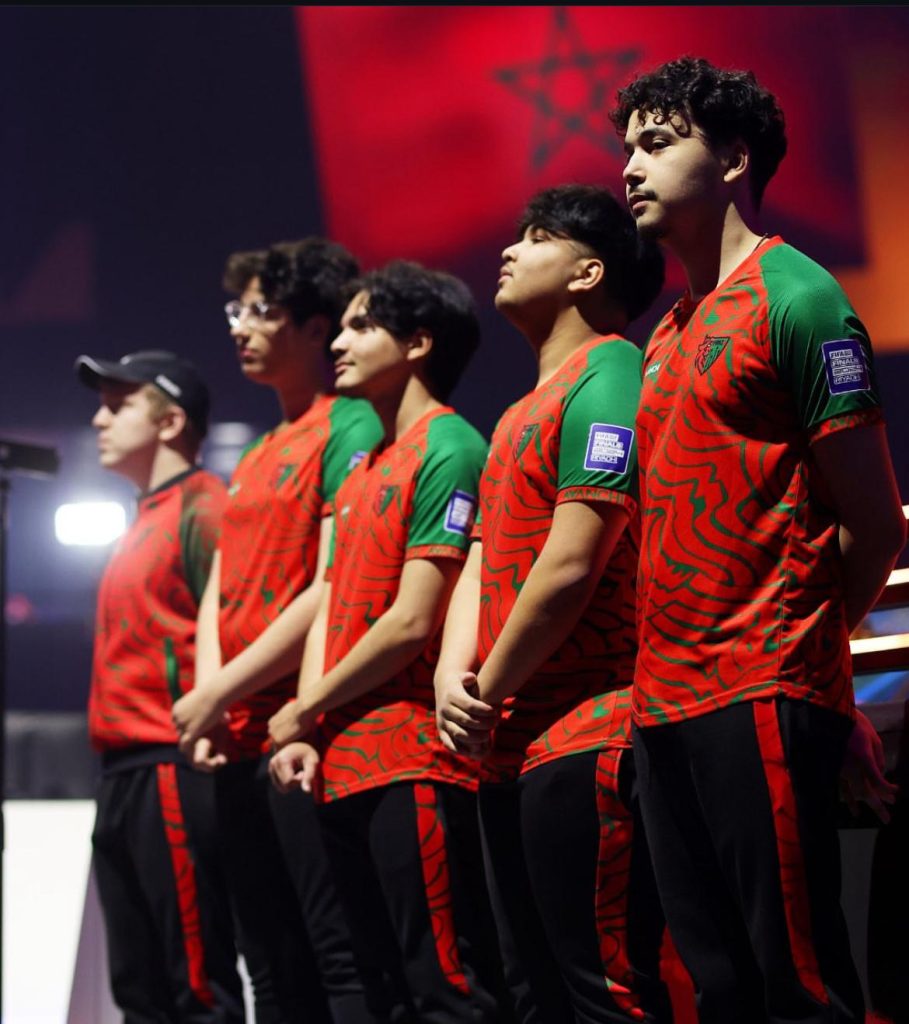
Across Africa, Morocco’s model stands out as proof that institutional support and cultural alignment can elevate esports from grassroots passion to global competitiveness. Moroccan players such as dralii, AN10_Tienes, xcharifx, and others have become symbols of what African talent can achieve when given the right structure.
An Inclusive Vision for the Future
Morocco’s ambitions extend beyond winning tournaments. Its long-term strategy focuses on infrastructure, training, and good governance to ensure sustainability and inclusiveness. Youth centers are being equipped with gaming facilities, while certified training programs for players, coaches, and referees, both in-person and online, are raising professional standards nationwide.
Competitions like eBotola and eDawry also provide financial opportunities, allowing players to earn salaries and secure contracts locally and internationally. Plans for standardized player contracts and transfer systems further underline Morocco’s commitment to protecting athletes and professionalizing the ecosystem, an approach that many African nations are beginning to emulate.
Morocco’s Impact on Africa’s FIFAe Presence
Morocco’s influence is especially visible in FIFAe competitions, where it has become one of Africa’s most consistent performers. From topping qualifier groups in the FIFAe Nations Series 2022, to reaching the top eight in console competitions and finishing runner-up in mobile formats, the country has demonstrated depth across multiple titles.
Its historic triple qualification for the FIFAe Finals 25, across console, mobile, and Rocket League, cements Morocco’s status not just as a participant, but as a continental leader in football esports.
A Blueprint for African Esports Growth
Morocco’s journey shows what is possible when passion meets policy. Through governance, transparency, and long-term planning, the country has transformed football esports into a national project with continental impact.
For Africa’s esports community, Morocco is more than a success story; it is a blueprint. A reminder that with the right structures, African nations can compete, lead, and set global standards in football esports.