

Fourteen game titles. Hundreds of nations. One question: where does Africa stand?
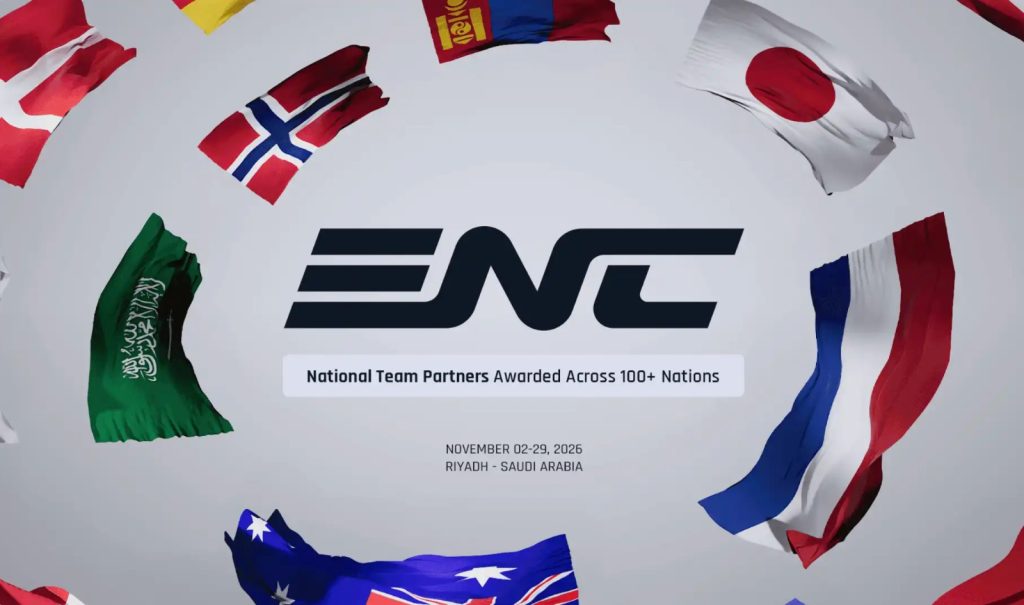
The Esports Nations Cup (ENC) is shaping up to be one of the most ambitious international esports competitions ever staged. With official partner status in more than 100 nations and a lineup of 14 game titles spanning mobile, PC, and casual gaming, the tournament promises to be a true test of national esports depth on a global scale. For Africa, a continent whose esports community has grown rapidly over the past decade, the ENC represents both an exciting opportunity and a moment of honest reckoning.
This article breaks down everything you need to know about Africa’s participation in the ENC: from game allocations and qualifier windows to the national partners and team managers who will carry the flag. We also ask some hard questions about representation, visibility, and what the numbers really tell us.
Africa’s Official National Team Partners
Five African countries have been confirmed as official ENC National Team Partners, meaning their organisations carry formal institutional responsibility for their national team’s participation. These five are the backbone of Africa’s ENC campaign.
- Egypt — Egyptian Esports Federation | Contact: Mostafa Hassan
- Morocco — Royal Moroccan Federation of Electronic Games (FRMJE) | Contact: Saad Bassy
- Nigeria — Cade Esports | Contact: Shola Adenipebi
- Senegal — Senegalese Federation of Electronic Sports & Associated Disciplines (FESSEDA) | Contact: El Hadji Mansour Jacques
- Tunisia — Tunisian Esports Federation | Contact: Mouhamed Ali Barbouchi
Of note is the diversity of these partner organizations. Egypt, Morocco, Tunisia, and Senegal are represented by national esports federations, bodies with formal governance structures that, in several cases, are government-recognized and affiliated with international bodies such as the Global Esports Federation (GEF) and the International Esports Federation (IESF). Nigeria’s partner, Cade Esports, is a private esports organization, highlighting a broader trend on the continent where private entities have at times outpaced institutional bodies in building competitive infrastructure.
Africa’s National Team Managers
Beyond the five official partners, nine additional African countries have confirmed National Team Managers, individuals tasked with assembling and managing their country’s squad across the relevant game titles.
- Cameroon — Francline Fonderson
- Côte d’Ivoire — Jean-Philippe N’Guessan
- Djibouti — Eleyeh I. Daher
- Ghana — Ebenezer Kwesi Hayford
- Kenya — Shon Osimbo
- Malawi — Robert Cheleuka
- Mali — Mohamed Coulibaly
- South Africa — Michele Brondani
- Zambia — Choolwe Elen Shabukali
This list spans the breadth of the continent, from West Africa (Mali, Côte d’Ivoire) to East Africa (Kenya, Djibouti) to Southern Africa (South Africa, Zambia, Malawi). Each of these managers will play a critical role in scouting talent, organising qualifying campaigns, and representing their nation’s interests throughout the competition.
However, a closer look at this list raises an uncomfortable question, one the ENC has yet to address publicly. Several of the countries on the National Team Manager list have active esports organisations that applied for, or were considered for, the National Team Partner role. In most of these cases, the organisations were not selected as NTPs. Yet in a striking twist, officials from those very same organisations have been appointed as the country’s National Team Manager.
Put simply, the ENC deemed an organisation unfit to serve as an official partner, then appointed that organisation’s own representative to manage the national team. If the organisation lacked the credibility, governance standards, or capacity to hold the NTP role, on what basis does one of its officials now carry the authority of a National Team Manager? The roles are different in title, but both carry significant responsibility for how a country is represented at the ENC. The logic does not hold.
This inconsistency does not just raise eyebrows; it risks undermining the integrity of the selection process itself. The esports federations and organisations that were passed over for NTP status deserve a clear explanation of why they were declined, especially when their officials are simultaneously being deemed suitable in a different but related capacity. Until the ENC provides that clarity, the selection process for Africa will remain, at best, confusing, and at worst, arbitrary.
The Questions That Need Asking
Africa’s ENC representation raises several important questions that the community deserves honest answers to.
Where Are the Missing Nations?
A look at the ENC’s official nations setup page reveals a notable gap: a number of African countries with active, well-established esports communities are listed simply as “Apply here as coach or team captain”,meaning they have not been confirmed in any official capacity. This includes competitive nations such as Algeria, Somalia, and Namibia, among others.
At the time of writing, it remains unclear whether these countries did not submit applications, or whether their applications were reviewed and declined. The distinction matters enormously. If the issue is awareness or resource constraints, it is addressable through targeted outreach and support. If applications were declined, the ENC owes the community transparency about its selection criteria. Either way, the absence of several prominent African esports markets from the confirmed list is a gap worth closing before qualifiers begin.
Four Federations Out of Twenty — Is That Enough?
Africa currently has more than 20 active national esports federations and associations, several of which are government-recognised and maintain active affiliations with international governing bodies. Against that backdrop, only four federations appear on the ENC’s confirmed partner list for Africa.
By comparison, regions such as Europe and Asia have a far higher proportion of their federations represented. The question is not whether the four confirmed federations are capable; they clearly are. The question is what criteria the ENC applied in its selection process, and whether those criteria inadvertently created a barrier for federations with strong governance structures but perhaps less commercial visibility. The ENC has an opportunity here to clarify its process and demonstrate that institutional capacity, not just network reach, is the deciding factor.
Visibility Matters — So Where Are Africa’s Flags?
There is a subtler but equally important issue at play: representation in the ENC’s own communications. Promotional videos, banners, and official artwork from the ENC have consistently overlooked African countries, with their flags absent from the competition’s visual landscape.
For a tournament built on the premise of national pride and global inclusion, this oversight cannot go unacknowledged. Visibility is not a cosmetic concern; it shapes how African players, fans, and sponsors perceive their stake in the competition. If the ENC is genuinely committed to equity across its 100-plus partner nations, the marketing and communications teams need to ensure that every participating region, including Africa, sees itself reflected in the tournament’s face.
Africa’s Game Title Allocations and Qualifier Schedule
Africa has been allocated slots across a range of titles in the ENC. Below is a full breakdown of each game title with African relevance, including the regional allocation and qualifier windows where confirmed.
Mobile Legends: Bang Bang (MLBB)
- African Slots: 1
- Qualifier Window: TBA
Dota 2
- Central & South Africa: 1 slot
- MENA (including Central Asia): 2 slots
- Qualifier Window: June 16 – July 15
Fatal Fury: City of the Wolves
- African Slots: 1
- Qualifier Window: TBA
Chess
- African Slots: 8 — the highest dedicated African allocation of any title in the ENC
- Qualifier Window: June 7 – June 14
Counter-Strike 2
- South & Central Africa: 1 slot
- Qualifier Window: TBA
PUBG Battlegrounds
- EMEA: 4 slots
- Qualifier Window: June 10 – June 12
Apex Legends
- EMEA: 9 slots
- Qualifier Window: TBA
Valorant
- MENA: 2 slots
- Qualifier Window: TBA
Rocket League
- African Slots: 3
- Qualifier Window: July 17 – July 19
League of Legends
- Middle East & Africa: 2 slots
- Qualifier Window: TBA
PUBG Mobile
- MENA: 2 slots
- Central & South Africa: 2 slots
- Qualifier Window: July 10 – July 12
EA FC
- Total Pool: 56 slots + 8 wild cards
- African Inclusion: Confirmed, with African qualifiers included. Exact slot count for Africa not yet confirmed.
- Qualifier Window: TBA
It is worth noting that Chess leads the way with eight dedicated African slots, making it the single game title with the highest African allocation in the ENC. Rocket League also provides a dedicated three-slot African qualifier. Titles such as Apex Legends, Valorant, and League of Legends fold African nations into wider EMEA or Middle East & Africa brackets, making the path to qualification more competitive by design.
Looking Ahead
Despite the open questions, the presence of fourteen African nations across partner and manager roles is meaningful. The continent’s esports community has worked hard for years to build the infrastructure, competitive scenes, and institutional credibility that make this kind of participation possible. The players who will represent Egypt, Morocco, Nigeria, Senegal, Tunisia, Cameroon, Côte d’Ivoire, Djibouti, Ghana, Kenya, Malawi, Mali, South Africa, and Zambia carry that history with them.
The Chess qualifier in early June, the Rocket League qualifier in July, and the PUBG Mobile qualifier in mid-July represent Africa’s earliest opportunities to make an impression. These windows are tight, and preparation will be critical. Federations, team managers, and players across the continent will need to coordinate quickly to field competitive squads.
The Esports Nations Cup is a stage unlike any that Africa’s esports community has had access to before at this scale. The opportunity is real. The infrastructure challenges are real, too. What happens between now and the qualifiers will tell us a great deal about where African esports truly stands,and what it is capable of.